← Back to Supportive Tech

Portfolio & creative archive practice

Your work deserves a home of its own.

I help writers, artists, researchers, performers, founders, and other established professionals gather, shape, publish, and preserve the work of a lifetime—so it can be found, understood, and carried forward.

The heart of the practice

Not just a website. A structure for your body of work.

You may have decades of writing, talks, research, performances, artwork, projects, press, correspondence, photographs, or recordings. The material has value—but it may be scattered, inconsistently described, or dependent on services you do not control.

We turn that accumulation into a coherent, durable home. The result can serve colleagues and audiences today while giving future collaborators, family members, researchers, or archivists something they can actually navigate.

What we can build

One project, three layers of value

The exact mix depends on your work, your audience, and how much material already exists.

01

A public portfolio

A clear, distinctive website that helps people understand the arc of your work—not just your latest title.

  • Selected projects and career chapters
  • Writing, talks, press, and media
  • Useful context, credits, and connections
  • A voice and structure that feel like you
02

A creative archive

A navigable collection that preserves relationships among the work, its history, and the people around it.

  • Inventory and collection structure
  • Dates, descriptions, rights, and sources
  • Digitization and file organization priorities
  • Private, public, and sensitive boundaries
03

A continuity system

A practical way to keep the collection healthy after launch, without making you dependent on one person or platform.

  • Repeatable publishing workflows
  • Backups and exportable source material
  • Plain-language documentation
  • Handoff to assistants, family, or institutions

Selected work

Archives built around real lives and real bodies of work

Every collection calls for a different balance of recovery, editorial context, technical structure, privacy, and public access.

Building expertise · early web publishing

Donald Pearman

In 1999–2000, helped building contractor Donald Pearman turn hundreds of local newspaper columns written over many years into a hand-built hypertext site offering practical expertise to homeowners.

Photography · private archive

150,000+ photographs

Organizing the private archive of a realtor and landscape architect, developing a workable structure for more than 150,000 photographs while respecting the boundary between personal material and work for eventual sharing.

Ways to begin

Start with the part that matters most

You do not need to commit to a complete archive at once. We can begin with a bounded piece of work and build from there.

Archive survey & roadmap

Inventory the material, identify risk and opportunity, and leave with priorities and a practical plan.

Public portfolio

Shape selected work and career chapters into a distinctive website people can understand and explore.

Archive buildout

Recover, organize, describe, preserve, and selectively publish a substantial collection over useful stages.

From accumulation to understanding

We make the story visible without flattening its complexity.

What you may have now

Folders, links, credits, files, old pages, recordings, and memories—each meaningful, but hard for another person to see as a whole.

What we work toward

A legible body of work with enough context to invite discovery, while respecting privacy, ambiguity, and the way a career actually unfolds.

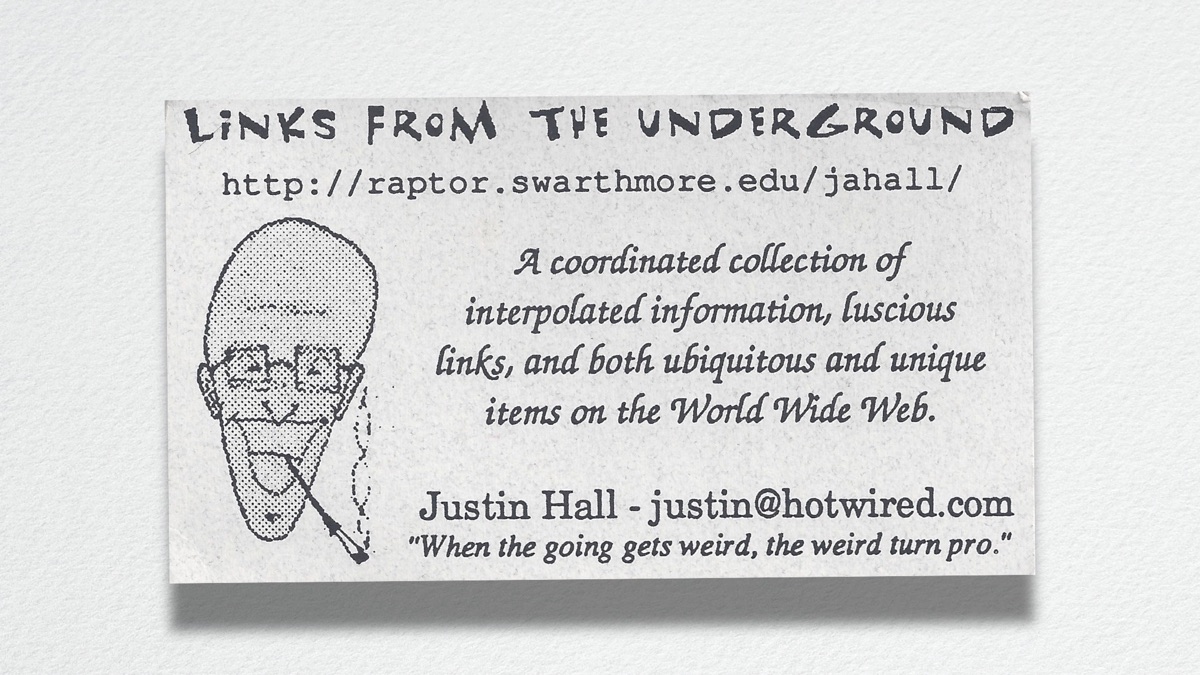
A 1990s card advertising Justin Hall's early personal website, Links from the Underground
Living with the archive: Justin has maintained an evolving personal web presence since 1994.

How we work

Editorial judgment meets practical systems

This is collaborative work. You bring the knowledge and sensibility; I bring structure, technical fluency, and steady forward motion.

  1. 1

    Survey

    We look at what exists, where it lives, what feels important, and what is most at risk.

  2. 2

    Shape

    We identify audiences, themes, permissions, priorities, and an organizing structure that fits the work.

  3. 3

    Build

    We organize material, write context, digitize selectively, and create the public and private systems.

  4. 4

    Carry forward

    We document the system, establish backups, and make sure the right people can maintain it.

Why Justin

I have spent decades making, managing, and explaining digital culture.

I published an early expansive personal website, helped launch HotWired, worked in journalism and online media, made games and documentary video, and managed large collections of pages, images, links, and community material.

That history matters here. I understand old formats, changing platforms, and the difference between simply putting files online and creating a collection people can understand. I also know that the most important questions are often editorial and human: what belongs together, what needs context, what should stay private, and who should be able to carry the work forward.

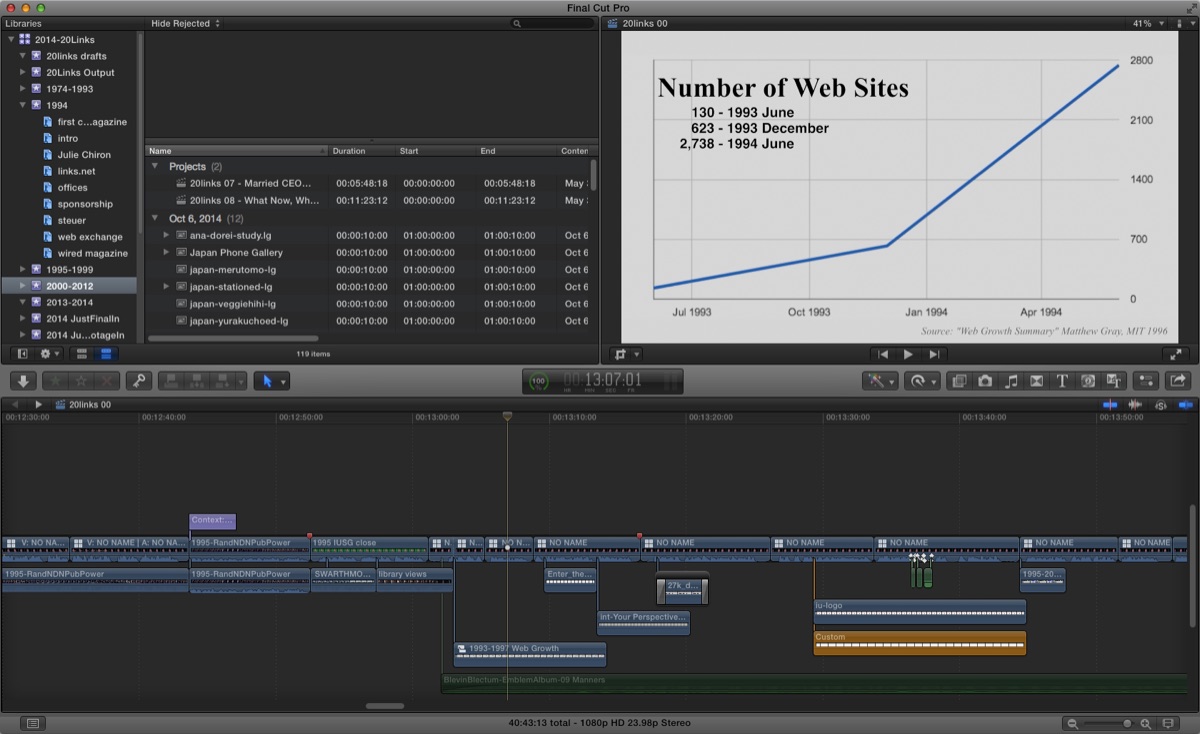
A documentary video editing timeline showing organized archival media
Organizing years of material into a documentary edit.

Client perspective

“Justin is head and shoulders above the rest.”

Howard Rheingold · Google review

Common questions

You do not need to have it all organized first.

Is this only for people near the end of their career?

No. It is for anyone with a substantial body of work that has outgrown a conventional biography or portfolio. The best time to create structure is often while you are still actively making and publishing.

Do we have to put everything online?

Absolutely not. A strong archive distinguishes between public, private, restricted, sensitive, and still-undecided material. Publishing is selective; preservation can be much broader.

Can you work with my assistant, family, or an institution?

Yes. These projects often benefit from shared stewardship. I can help establish roles, documentation, permissions, and a process other people can understand and continue.

What does an engagement look like?

We begin with a free 15-minute conversation. If there is a fit, a focused archive survey and written roadmap can stand alone or become the first stage of a larger portfolio or archive build. Remote collaboration is available nationwide.

Start with the work you have

Let’s give it a durable, generous home.

Tell me what you have made, where it lives now, and what you hope becomes possible.